Jesus and I on the Road
A story to help us understand why Jesus had to be born to the poorest of the poor.
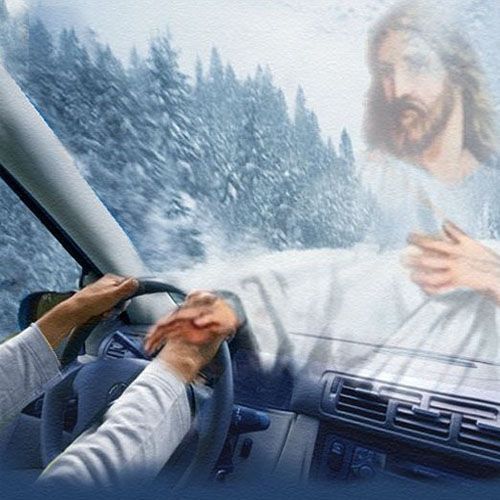
I had to work the Wednesday before Thanksgiving that year.
My wife and kids had gone up north the day before to celebrate with the whole family. I finally finished my project and groaned when I looked at the clock. It was 5:20 PM, already dark... going-to-snow dark.
Good planning, buddy, I thought.
The car was filled with gas and my things were loaded in the cargo area. I got on I-75 northbound at M-59 with half of Michigan as my traveling partners - or, more accurately, competitors. The battle for the left fast lane was brutal, so I settled into the middle lane and followed traffic at a leisurely pace.
I began thinking about Christ and His birth in what was likely a filthy stable.
My father’s family were farmers, and I knew what a stable looked and smelled like. Then I wondered why He had to come to us poor and not of royalty.
I must have drifted off mentally, because suddenly I realized I was already in Flint. I shook my head and thought maybe I needed to stop for coffee, but I pressed on.
It began to snow... big, wet flakes that melted (thank God) as they hit the pavement. Even so, it was close to a whiteout. We all slowed down, except those in the far-left lane who kept going at a reckless pace.
The snow was mesmerizing as I listened to Mannheim Steamroller Christmas on Pandora.
As I stared ahead, I had the strange sensation that someone was sitting in the passenger seat. I glanced over and froze.
The music had stopped.
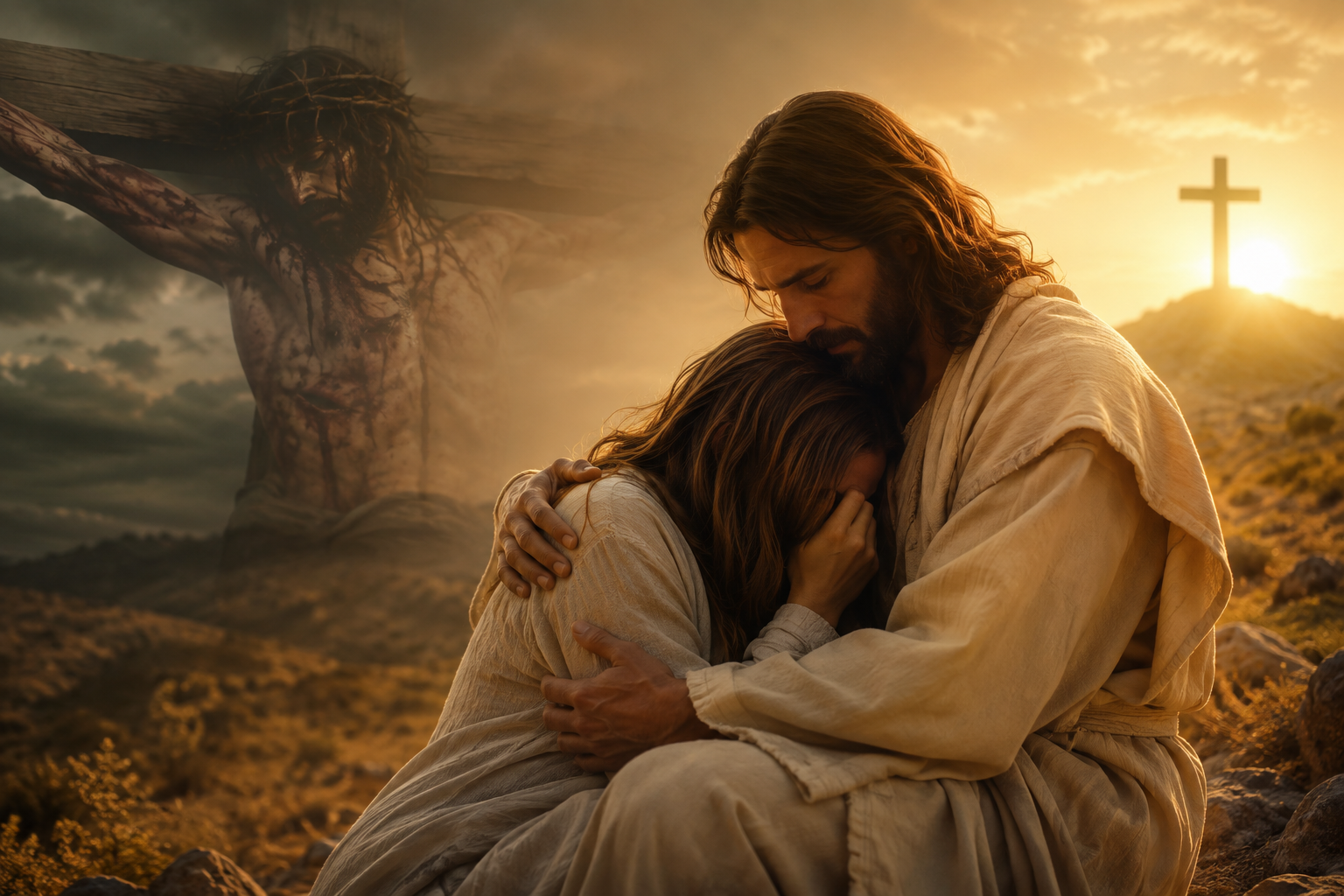
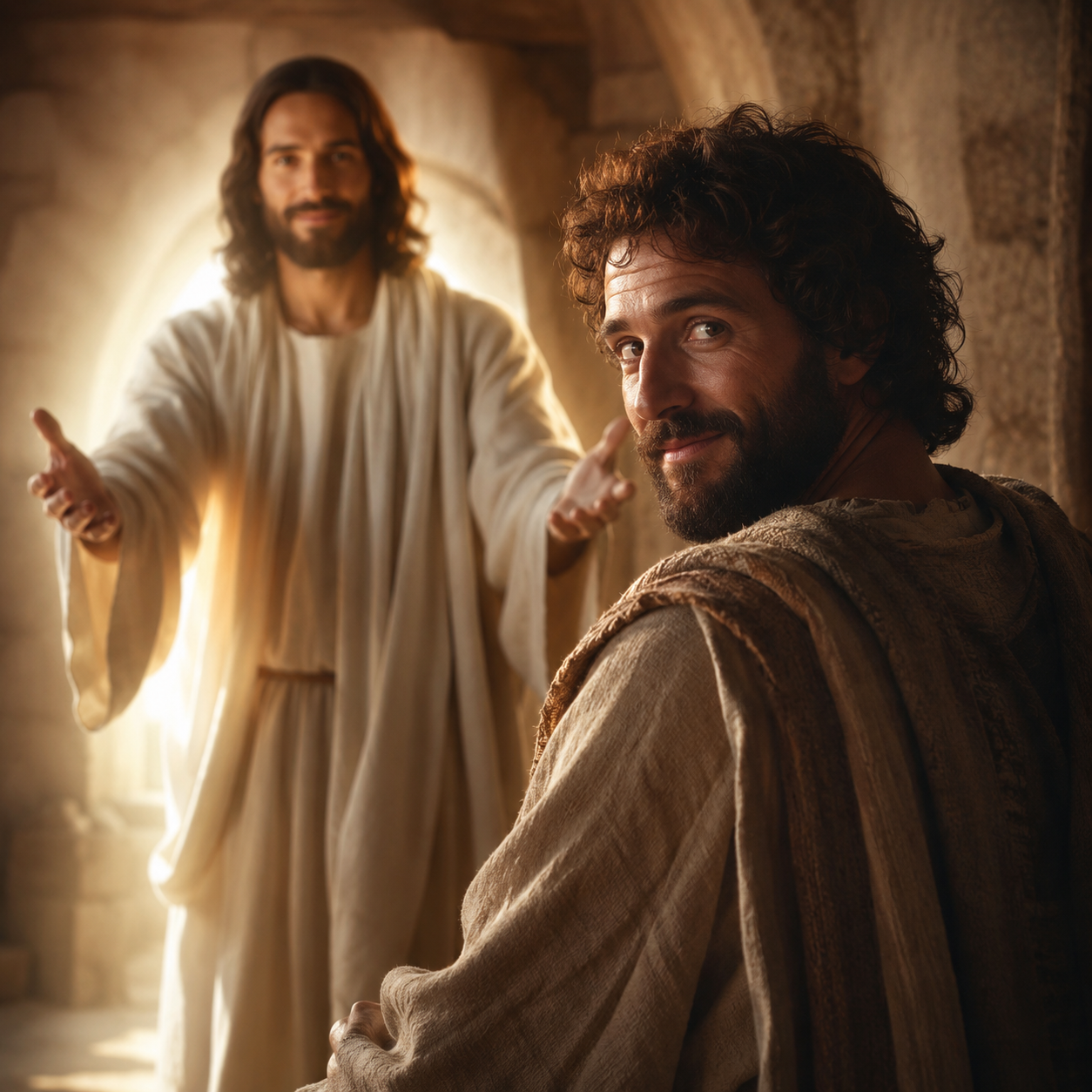
Jesus was looking at me with a smile on His holy face. The Holy Spirit must have taken over the steering wheel, because I kept driving while I stared at Him, unsure what to do. I wondered whether I had been in a terrible accident and died. Jesus told me no - I was fine.
Have you ever wondered what you would say to Jesus if you had the chance?
In many conversations with my prayer buddies, I had always assumed my first words would be, “My Lord, have mercy on me!” Instead, what came out was, “What are you doing here?” Not exactly the greeting I had envisioned.
Still smiling, He answered, “I’m here to answer your questions about why I had to come into the world as a humble, poor boy. Perhaps you can return your attention to the road while I explain.”
“But why me, my Lord?”
“But why not you, my son?” He replied. “Let me begin, and feel free to ask whatever questions you have.”
Almost whispering, I asked, “Okay… did You really get born in a stable and placed in a manger?”
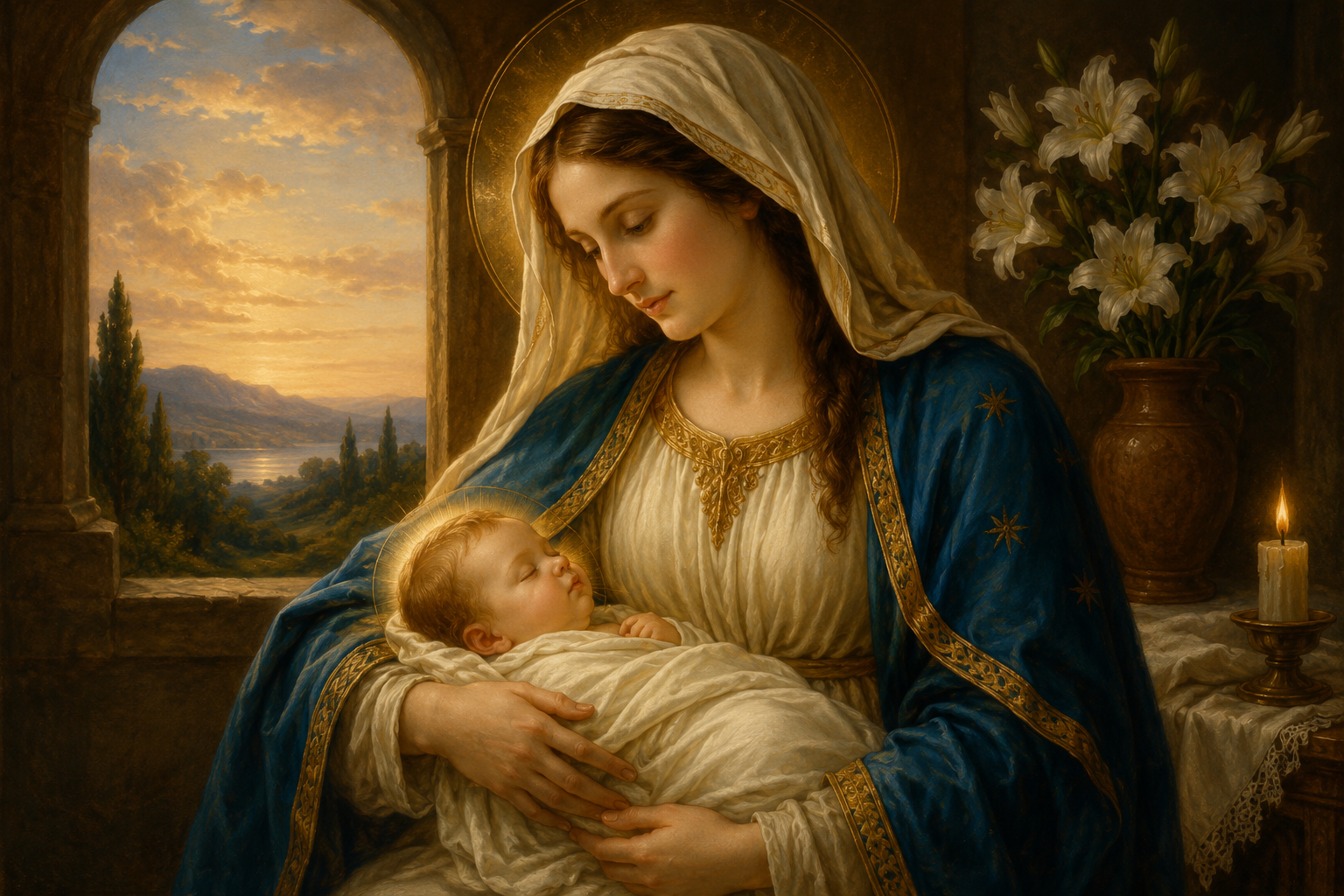
“Yes. The image of my birth is mostly accurate. There was no room anywhere. But that was My Father’s plan from the beginning. It was not an accident, it was perfectly timed and purposeful. My Father intended an act of divine humility to save His people.
“It was the divine act of kenosis, or self-emptying. My Apostle Paul describes this astonishing condescension in his letter to the Philippians: ‘Who, being in very nature God, did not consider equality with God something to be used to his own advantage; rather, he made himself nothing by taking the very nature of a servant, being made in human likeness. And being found in appearance as a man, he humbled himself by becoming obedient to death—even death on a cross!’ (Philippians 2:6–8, NIV)
“You see, my son, I was rich in the treasures of Heaven, but poor in earthly family and status.”
I lamented, “But You could have done so much more as the son of a king!”
“No, you’re mistaken. The masses of my people who needed me were poor. And the few who needed me the most were the royalty who held the masses in bondage.
Being the humble son of a carpenter put me in direct contact with the people I came to save... the ones who wanted to be saved, who needed hope and peace. As it says in 2 Corinthians: ‘For you know the grace of our Lord Jesus Christ, that though he was rich, yet for your sake he became poor, so that you through his poverty might become rich.’ (2 Corinthians 8:9, NIV)
“My birth in poverty symbolized my relinquishing of heavenly glory to embrace the human condition fully, from beginning to end. By choosing to be born into the family of a carpenter, in a humble setting, I identified immediately with the vast majority - the poor, the working class, and the marginalized.”
He continued as I stared ahead at the swirling snowflakes. “Had I been born into a wealthy or powerful family, my message might have seemed exclusive, aimed only at the elite. My poverty demonstrated that God’s salvation is for all people: rich and poor, powerful and insignificant. It also showed that true blessing is not found in material wealth.”
“Yes, but You allowed Yourself to be displayed as an insignificant newborn.”
Jesus took a gentle breath and continued. “Being placed in a feeding trough in a place where animals were kept (Luke 2:7) instantly aligned Me, the King of Kings, with the lowest of society.” Then it dawned on me: Jesus had to come as a nobody to reach the people His miracles were meant for... the lowest, the overlooked. If He had come as the son of a king, performing miracles for lepers and the blind would have been seen only by the wealthy, who did not mingle with the common people. In the ancient world, and even today, wealth was often seen as a sign of divine favor. By being born poor, Jesus challenged that assumption directly. He became the Savior people brought their loved ones to for healing, physical, mental, and spiritual.
I was nodding when I realized I was alone again.
The snow had stopped, and I was just outside West Branch.
I reached over and touched the seat beside me. Was I imagining things, or could I still feel the warmth from His holy presence? Had the conversation been real?
Suddenly I thought of Mary and Joseph, poor Jews, faithful to God and the Law of Moses. How did they manage the journey with their newborn son, Jesus, the Son of God? How do you discipline the Son of God? If He wanted dessert first, how would you tell Him it was better to eat His vegetables?
I thought about Joseph receiving the message in a dream to flee to Egypt with Jesus and Mary. Did he return to Nazareth to pack, or leave directly from Bethlehem? It was a 150-mile, ten-day journey. How did they pack enough food and supplies?
I arrived at my destination full of more questions than answers, waiting for Jesus to return and finish the conversation. But deep down, I knew He had already answered me, by encouraging me to seek the rest in the Holy Scriptures.
Challenge: this Advent, dive deeper into the birth of our Lord by...
- Joining a Bible study and exploring what Scripture says about the birth of Jesus.
- Spending time with your children and talking about why Jesus was born poor and how that poverty was essential to His mission.
Happy Advent!