The Man Who Never Uttered a Word in the New Testament
Writing about St. Joseph, the husband of the Blessed Mother, is a challenge to capture the "eloquent silence" of a man who never uttered a word in the New Testament.
Yet, his presence is the cornerstone upon which the Holy Family, and by extension, the theology of the domestic church... rests.
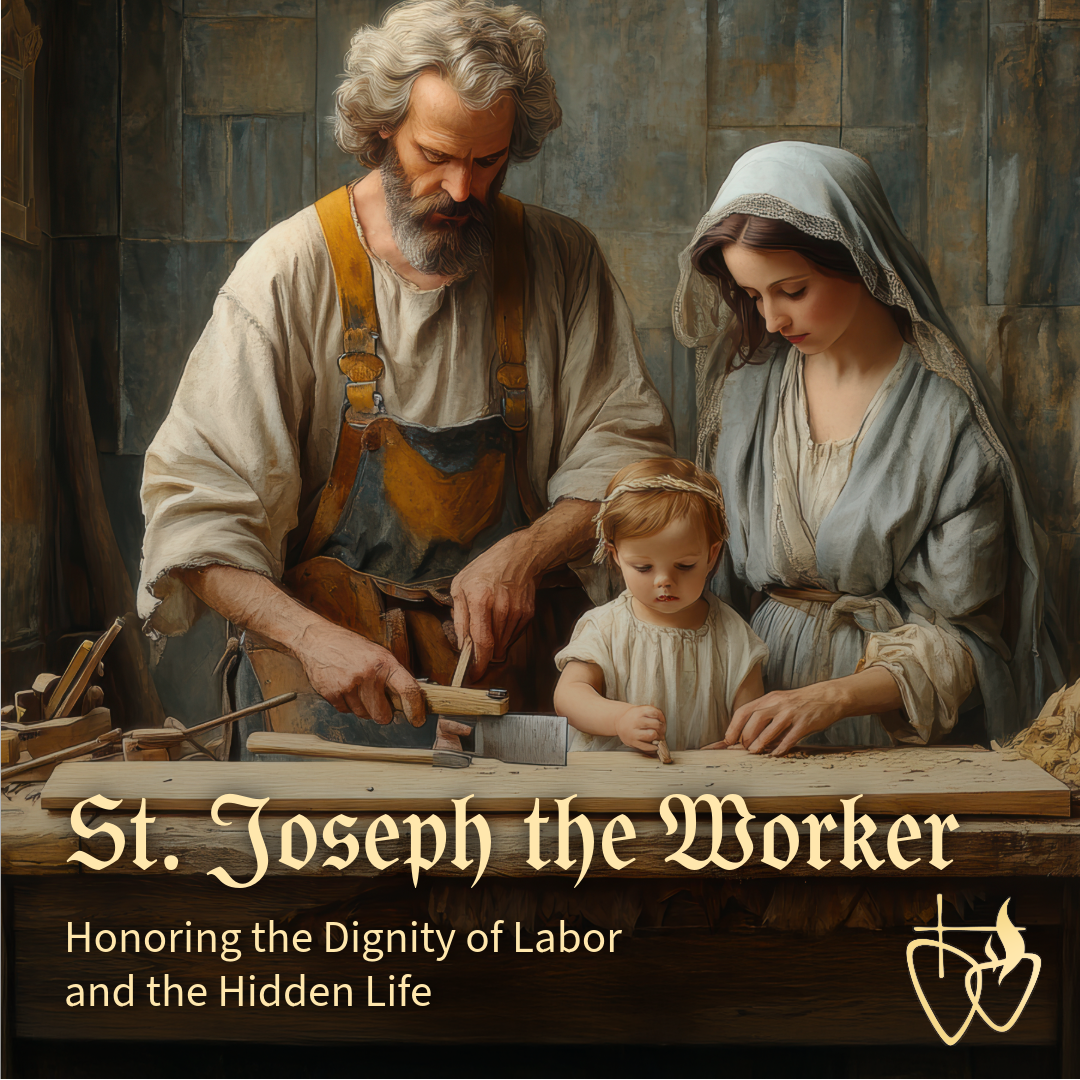
Joseph holds a unique dual title: Patron of the Universal Church and Saint Joseph the Worker.
To understand his importance, we have to look at how he balanced the unrealistic responsibility of guarding the Son of God with the gritty, splinter-filled reality of a first-century carpenter.
The Theology of Presence: The Husband of Mary
In the context of salvation history, Joseph’s role as the husband of the Blessed Mother is often viewed as "supportive," but it was fundamentally, revolutionary.
The Guardian of the Mystery
When Joseph discovered that Mary was with child, he faced a crisis of faith and of the law. In a world of rigid social structures, his decision to take her into his home - prompted by a dream - was an act of radical obedience to God. He became the "Chaste Guardian of the Virgin." His importance here isn't just about protection; it's about legitimacy. By marrying Mary, Joseph legally established Jesus as a member of the Line of David, fulfilling the messianic prophecies.
The Model of Masculine Virtue
Joseph redefines "strength." In the modern era, we often mistake volume for power. Joseph, however, is powerful because he is disciplined. He protected his wife during a harrowing flight to Egypt and navigated the anxieties of a displaced refugee family. His relationship with Mary was one of total self-gift, providing a blueprint for what a "holy marriage" looks like: a partnership built on a shared mission rather than mere emotional satisfaction.
Saint Joseph the Worker: the Sanctification of the Ordinary
In 1955, Pope Pius XII established the Feast of Saint Joseph the Worker on May 1st. This wasn't just a calendar update; it was a profound statement on the dignity of human labor.
The Carpenter’s Gospel
We often gloss over the fact that Jesus was known as "the carpenter's son." For thirty years, the vast majority of his life, the Savior of the world was a blue-collar apprentice.
- Labor as Prayer: Joseph taught us that work is not a curse or a necessary evil to fund our "real" lives. Instead, work is a participation in God’s ongoing creation. Whether he was carving a beam or fixing a door, Joseph did so with the same devotion he used in prayer.
- The School of Nazareth: It was Joseph’s calloused hands that taught Jesus how to hold a tool, how to measure accurately, and how to deal fairly with customers. Joseph’s "importance" lies in the fact that God the Father chose this man as the earthly mirror of His own fatherhood.
Breaking the "Sacred/Secular" Divide
Saint Joseph the Worker reminds us that there is no wall between the sanctuary and the workshop. If the man who raised God spent his days covered in sawdust, then our own mundane tasks... sending emails, washing dishes, or paving roads... carry a hidden, divine weight. I remember the phrase “honest work,” which meant working with your hands or your back. I remember that the culture in the late 1990s was that you should strive to get a college degree rather than work with your hands.
St. Joseph shows us that there is honor, not shame, in doing honest work.
Young men and women entering trades such as electrician, masonry, and plumbing are beginning their careers, earning up to $ 70,000 a year. As we all know, not all young people are cut out for college.
The Patron of a Happy Death and Modern Relevance
Why does Joseph matter in 2026? Perhaps more than ever. He is the patron of the "hidden life." In a world obsessed with "likes," "shares," and public recognition, Joseph represents the value of being known by God alone.
The "Shadow of the Father"
The Polish author Jan Dobraczyński famously called Joseph the "Shadow of the Father." This captures his essence perfectly. A shadow doesn't exist for itself; it follows the movement of the light. Joseph’s entire life was a shadow of the Heavenly Father's care for humanity.
His importance lies in his availability. He was a man of action, not words. Every time God asked him to move - to take Mary as his wife, to flee to Egypt, to return to Nazareth - the Gospel tells us "he rose and did so." No debate, no hesitation.
Final Reflection
Saint Joseph the Worker and the Husband of Mary stand as the bridge between the Old and New Testaments. He is the last of the Patriarchs and the first of the Saints to recognize Christ. He proves that you don't need a platform, a title, or a single recorded quote to change the course of history. You simply need to show up, do the work, and love the family God has placed in your care.
Those who want to follow St. Joseph’s quiet ways learn to work hard without complaining, work smart without bragging, and work fairly without overcharging or asking for more. Set the example, simile, and stay in a state of prayer as your work.
Set the example.
David Tay