How to Fast & Abstain on Good Friday to Prepare for Easter
How to prepare for Easter Properly
Fasting & Abstinence, Confession & the Cross
Why Catholics Fast and Abstain on Good Friday
Why Catholics Fast and Abstain on Good Friday
Fasting and abstinence on Good Friday, along with going to confession before Easter, are rooted in Scripture and clearly taught in the Catechism of the Catholic Church (CCC). These practices prepare Catholics to enter the Paschal Mystery with clearer minds, freer hearts, and deeper repentance.
As an usher, I help manage the avalanche of humanity - the young, the old, the sugar-overdosed children, and parents trying to find seats three minutes before Holy Mass begins. No one wants to be directed to the overflow room with live streaming. This is the year your family can get the in-church seats early enough. You arrive prayerful before Mass, review the readings on your phone at dailyreadings@usccb.org before Holy Mass begins, and discuss them with your family so you can receive the full impact of the Gospel on Easter Sunday.
Remember, Easter is about going to Holy Mass to worship Him.
Guide:
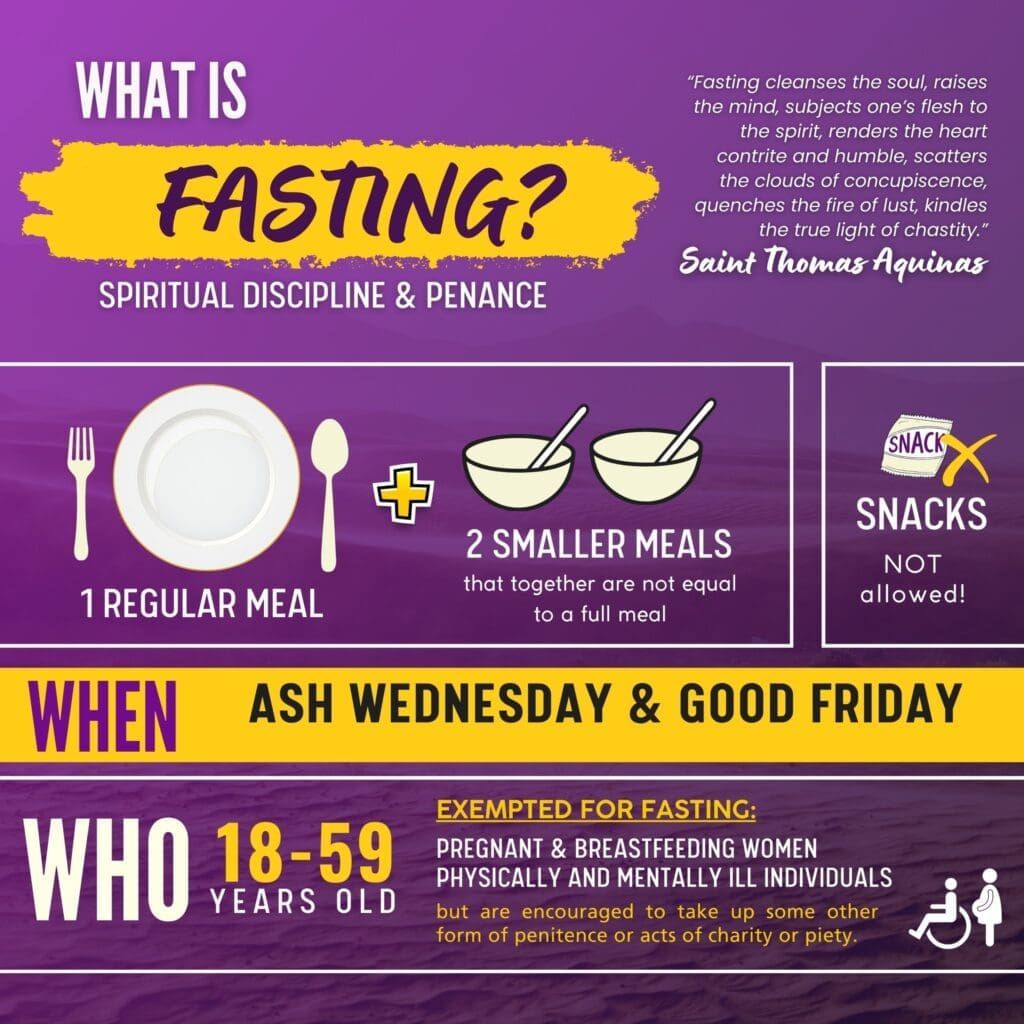
Rooted in Scripture
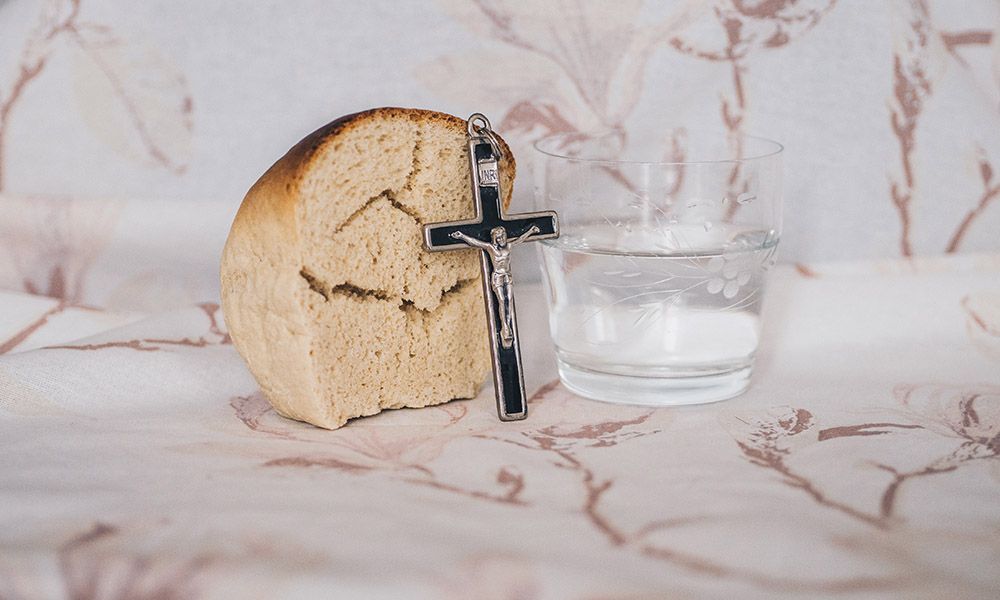
Good Friday is one of the most solemn days of the year. The Church requires fasting and abstinence as a concrete way to unite ourselves with Christ’s Passion and to practice true repentance.
Penance and turning back to God are consistently linked with fasting in Scripture. The prophets call Israel to return to the Lord with fasting (Joel 2:12; Jer 18:11; Ez 18:30). Jesus Himself begins His ministry with the call to repentance (Mt 4:17). Jesus teaches that His disciples will fast after His departure (Lk 5:35). The early Church connects repentance, conversion, and fasting (Acts 2:38). The Catholic Church identifies fasting and abstinence as part of the “necessary minimum” for spiritual growth (CCC 2041).
Good Friday is an obligatory day of fasting and abstinence for Catholics aged 18–59 (fasting) and 14+ (abstinence).
The Church encourages extending the Good Friday fast into Holy Saturday as a “Paschal fast” to prepare for the Resurrection.
Fasting sharpens our spiritual focus, expresses sorrow for our sins, unites us with Christ’s suffering on the Cross, and prepares us to celebrate Easter with renewed hearts.
Abstinence from meat is a simple, communal act of penance that reminds us of the sacrifice Christ made for you and me.
Why Catholics Should Go to Confession Before Easter
Confession before Easter is not just a tradition, but a profound preparation for the Resurrection.
Biblical foundations
Jesus gives the apostles the authority to forgive sins (Jn 20:22–23).
“And with that, he breathed on them and said, ‘Receive the Holy Spirit. If you forgive anyone’s sins, their sins are forgiven; if you do not forgive them, they are not forgiven.’”
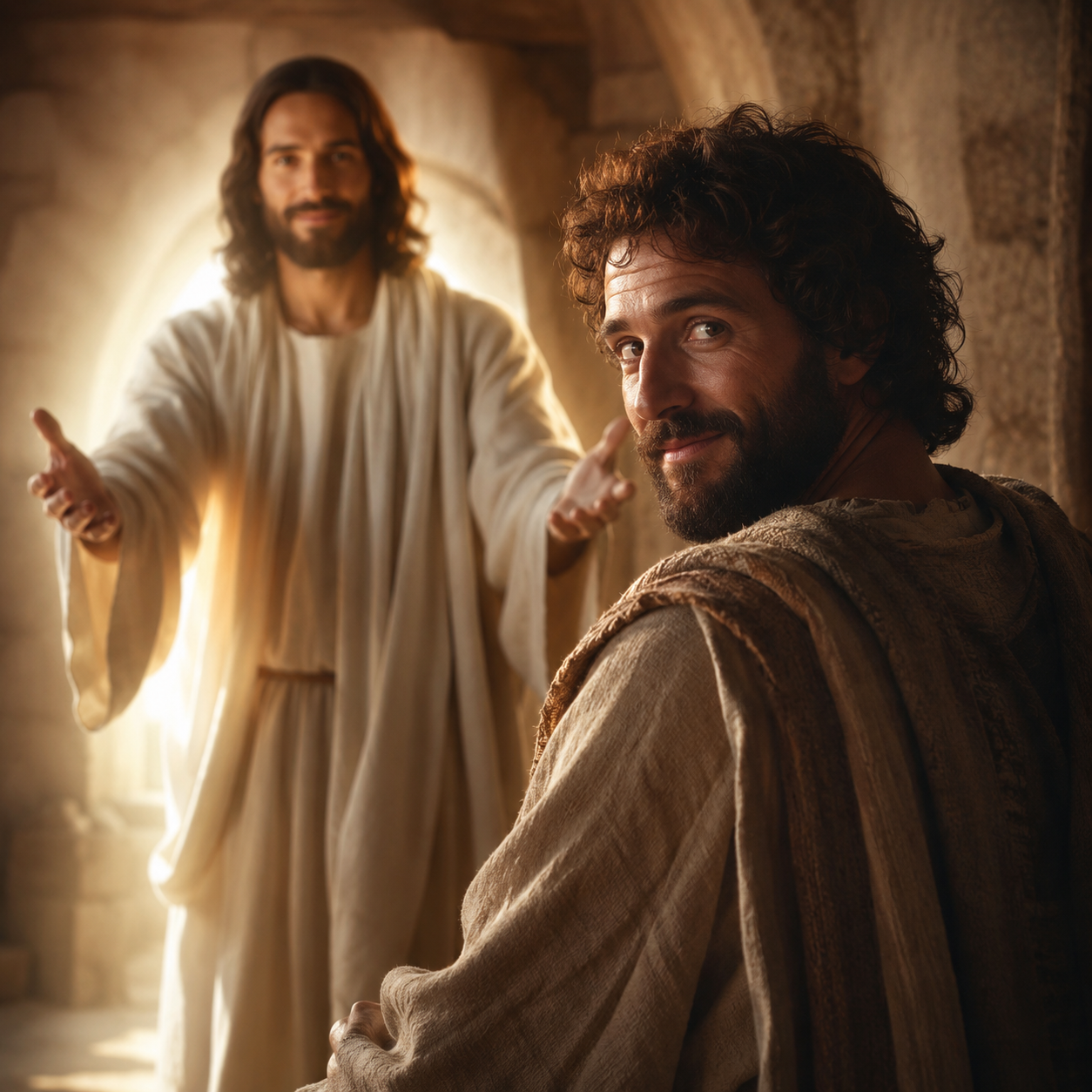
In these verses, Jesus appears to his disciples after his resurrection and breathes on them, telling them to receive the Holy Spirit. This moment is significant because it marks the beginning of the disciples’ empowerment through the Holy Spirit. Through this act, Jesus imparts not only a gift but also a mission. The instruction about forgiveness shows the authority Jesus gives to his followers. They are entrusted with a vital role in sharing God’s love and grace through the act of forgiveness, emphasizing that forgiveness is a central aspect of the Christian faith.
Repentance and conversion are essential to entering new life in Christ (Acts 2:38).
Peter replied, “Repent and be baptized, every one of you, in the name of Jesus Christ for the forgiveness of your sins. And you will receive the gift of the Holy Spirit. The promise is for you and your children and for all who are far off, for all whom the Lord our God will call.”
Catechism teaching
The Catholic Church requires confession of serious sins at least once a year (CCC 2042), and Lent is the natural time to fulfill this. Catholic confession restores us to sanctifying grace, which is necessary to receive the Eucharist worthily at Easter. Remember, only the Catholic Church has the Eucharist - the Body, Blood, Soul, and Divinity of Jesus Christ. “Communion” in a non-Catholic church is a remembrance.
The sacrament reconciles us with God and the Church, heals spiritual wounds, and strengthens us against future sin.
Give a full confession without excuses about why you sinned. Jesus already knows the truth, and He needs you to admit that you made this mistake knowing it was wrong. This is supposed to be hard, so that you don’t do it again.
Why before Easter specifically?
Easter renews our baptismal promises, and confession prepares the soul to make those promises sincerely. The Church urges the faithful to be spiritually ready for the Easter Triduum (Holy Thursday, Good Friday, and Easter) - the holiest days of the year. Confession allows us to enter Easter Sunday - April 5, 2026 - with a clean heart, free from the burden of sin.
After a good confession, you will feel freer and lighter. Give it a try.
How These Practices Work Together
Fasting, abstinence, and confession are not isolated duties. They form a unified path of conversion:
Fasting disciplines the body.
Abstinence expresses solidarity with Christ’s sacrifice.
Confession cleanses the soul and restores grace.
Together, they prepare us to celebrate the Resurrection not only as an event in history, but as a renewal of our own life in Christ.