More than Just Burned Palm Leaves: Ash Wednesday
Ash Wednesday occupies a unique space in the Catholic tradition. It is a day of paradox, a "public" display of "private" repentance.
As outlined in the Catechism of the Catholic Church (CCC) and echoed by contemporary voices like Bishop Robert Barron, Ash Wednesday is not merely a somber tradition; it is the "sacramental" doorway into the desert of Lent, a 40-Day spiritual journey mirroring Jesus’ time in the desert while fasting and praying.
1. Memento Mori: The Theology of Dust
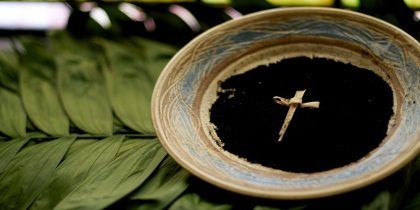
The primary symbol of the day is, of course, the imposition of ashes. The minister traces a cross on the forehead while uttering one of two formulas. The traditional call, "Remember that you are dust, and to dust you shall return," points directly back to Genesis 3:19. Memento mori is Latin, meaning that you must die.
The Catechism’s Perspective: The CCC emphasizes the gravity of our fallen state. In paragraph 1018, it reminds us that "as a consequence of sin, man must suffer 'bodily death, from which man would have been immune had he not sinned.'" Ash Wednesday forces a confrontation with this reality. It strips away the illusions of secular "immortality" - our wealth, our status, and our physical health - and reminds us that, biologically and physically, we are fragile.
Bishop Barron’s Insight: Bishop Barron often speaks of this as a "healthy detachment." He notes that we spend most of our lives "agonizingly preoccupied with our own egos." By wearing ashes, we publicly admit that our egos are destined for the grave. This is not morbid; it’s liberating. When we accept our mortality, we stop trying to find ultimate satisfaction in things that cannot last, such as collecting stuff and living a sinful life.
2. Metanoia: A Change of Mind and Heart
The second formula used during the imposition is: "Repent and believe in the Gospel." This highlights the Greek concept of metanoia, which literally means "going beyond the mind you have."
The Catechism on Penance: The CCC describes interior repentance as a "radical reorientation of our whole life, a return, a conversion to God with all our heart" (CCC 1431). Ash Wednesday is the catalyst for this reorientation. It is the Church’s way of saying that "business as usual" is not enough. This is the perfect time to begin planning for you and your family to schedule the date for confession. Most churches make multiple days and evenings available for this visit to a priest who will hear your confession and give you an easy penance.
The Call to Interiority: The Catechism is careful to note that outward symbols (like ashes) are "meaningless" without an internal shift. Paragraph 1430 states:
"Jesus' call to conversion and penance... does not aim first at outward works... but at the conversion of the heart, interior conversion."
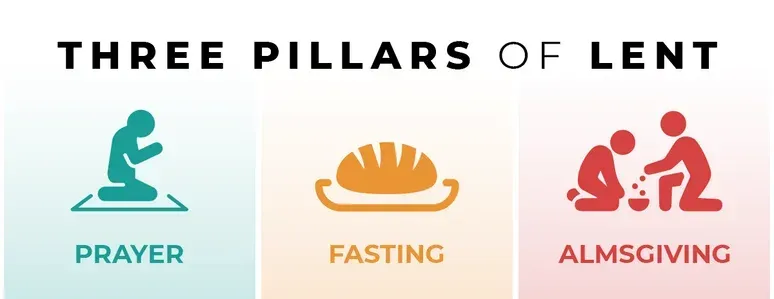
3. The Three Pillars: Prayer, Fasting, and Almsgiving
The Gospel reading for Ash Wednesday (Matthew 6) sets the tactical manual for the Lenten season. The Church identifies three specific practices to facilitate this "metanoia."
Prayer, fasting, and almsgiving work together to reorient the heart toward God and others.
- Through prayer, we reconnect with God as our true source, humbly confronting pride and self-sufficiency.
- Fasting intentionally creates a holy hunger for God, training us to master our desires and loosen the grip of sensuality and gluttony.
- Almsgiving turns us outward to recognize Christ in our neighbor, healing greed and unhealthy attachment by cultivating generosity and love.
Bishop Barron on Fasting: Barron frequently highlights that fasting is not about "denying the goodness of food," but about "re-ordering our desires." By feeling physical hunger on Ash Wednesday, we are reminded that "Man does not live on bread alone." It is a spiritual exercise in "willpower" that prepares us for the more difficult task of resisting sin. We are used to giving in to our immediate “hunger” for a snack or other “thing” that may be undesirable and not good for us. Gambling, adultery, drugs or porn are Satan’s tools to take us away from God. Lent is one of God’s tools for bringing us back through forgiveness.
4. The Communal Dimension of Sin and Grace
A significant aspect of Ash Wednesday is its public nature. While the Gospel warns against "performing for men," the Church also recognizes that sin is never purely private.
CCC 1440 explains that sin "entails the setting of oneself against God's love... it also damages communion with the Church." Therefore, the public wearing of ashes is a communal admission of guilt. We stand in line together—the priest, the layperson, the saint, and the sinner—acknowledging that we are all "in the same boat." We are a broken people in need of a Savior.
5. The Goal: The Easter Fire
Ash Wednesday cannot be understood in isolation. It is the beginning of a trajectory that ends at the Empty Tomb.
As Bishop Barron beautifully articulates, the "ashes" of Wednesday are only significant because they will eventually be washed away by the "water" of the Easter Vigil. The cross of ash on the forehead is a shadow of the cross of Chrism received at Baptism. We go into the "dust" of Lent so that we might be fit to share in the "glory" of the Resurrection. So wear the smear of ashes proudly and hold your head up high to show the world that you, a true Christian Catholic, are not afraid to confess your sins to the priest who is acting in persona Christi (in the person of Christ). The priest does not forgive sins on his own authority but acts as a divine channel of mercy, reconciling the sinner with God.
My first reconciliation was on my sailboat in the middle of Lake St. Clair with my wife's cousin, a newly ordained priest. My gosh, it was humiliating, but it was supposed to be. Shame about my behavior was part of the transformation from sinner to a better man, not quite a saint, but a saint want to be. After my absolution, I felt like a 50-pound rock had been lifted off my back.
The CCC's Final Word on Lent: The Catechism notes that by the solemn forty days of Lent, the Church unites herself each year to the mystery of Jesus in the desert (CCC 540). Ash Wednesday is our "Amen" to that invitation. It is the moment we step out of the frantic pace of the world and into the quiet, demanding, and ultimately life-giving silence of God.
Summary of Significance
Ash Wednesday serves as a "spiritual reset button." It provides:
- Truth: An honest look at our mortality.
- Humility: A public acknowledgement of our need for God.
- Action: A concrete commitment to the three pillars of Lenten discipline.
By starting with the "dust," the Catholic Church ensures that, when Easter arrives, the joy is not a cheap sentimentality but a hard-won victory over the death we acknowledged six weeks earlier, sacrifices.
We rejoice at the Risen Christ, as He takes us from Hell to Heaven. But He desires your Faith in Him. Don’t fake it this Easter, throw yourself into a 40-day journey with Jesus.
David Tay
Executive Director | Men of the Sacred Hearts