The Annunciation: One Yes, The Turning Point of History
The Annunciation is the pivotal moment
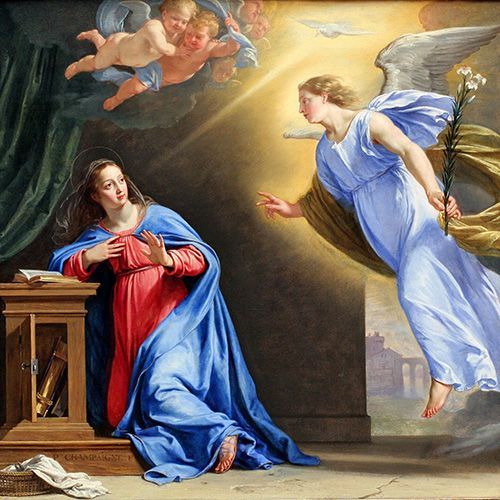
When God’s plan of salvation moves from promise to embodied reality: the angel Gabriel announces to Mary that she will conceive and bear Jesus, the Son of the Most High.
Historical Context
This event, narrated in Luke 1:26-38, marks the Incarnation, God becoming man through the free assent of a human person, and is celebrated liturgically on March 25.
Luke’s narrative situates the Annunciation in a precise historical and theological frame: Gabriel is sent in the sixth month (linking to the earlier annunciation to Zechariah), appears in Nazareth to Mary, a virgin betrothed to Joseph of David’s house, and greets her as “favored,” with the Lord present.
The angel announces that she will conceive a son named Jesus, who will be called Son of the Most High and inherit David’s throne. Mary asks how this can be since she is a virgin, and Gabriel explains that the Holy Spirit will come upon her and the power of the Most High will overshadow her. Mary’s response, her fiat, her yes, “Behold, I am the handmaid of the Lord; let it be to me according to your word," is the human assent that makes the Incarnation possible.
The Catechism of the Catholic Church treats the Annunciation as the moment when the Word assumed human nature and the beginning of the Church’s redemptive history. It emphasizes that the Incarnation is both a divine initiative and a human “yes”: God takes the initiative in sending the angel, but Mary’s free consent is essential to the mystery’s realization.
The Catechism also links the Annunciation to the fulfillment of Old Testament promises and to Mary’s unique role as Mother of God (Theotokos), underscoring both Christ’s true divinity and true humanity.
Remember, we think she was 14 or 15 years old when this happened to her. Perhaps there was fear, as she was yet a single young lady, and the culture of the time did not look kindly on pregnant unmarried maidens.
What was she going to tell her parents and Joseph?
The Incarnation as personal union
At the Annunciation, the Son of God assumes a human nature in Mary’s womb without ceasing to be divine; this union of natures in one Person is the heart of Christology.
Mary’s free consent
The Catechism stresses that Mary’s fiat is not passive resignation but an active, free cooperation with God’s will; her assent models human cooperation with grace.
Role of the Holy Spirit
Luke and the Catechism both highlight the Spirit’s action - overshadowing Mary - linking creation’s first act (the Spirit over the waters) with the new creation begun in Christ.
Fulfillment of promise
The announcement explicitly ties Jesus to Davidic kingship and the Most High, showing continuity with Israel’s hope and the surprising way God fulfills it through humility.
The Annunciation invites reflection on humility, obedience, and trust. Mary’s reaction - initial perplexity, questioning, and then confident assent - offers a pattern for Christian discipleship: honest questioning before God, openness to revelation, and willing cooperation.
Contemporary pastoral writers emphasize that Mary’s “yes” is not merely private piety but a model for the Church’s mission: to receive Christ and bear him into the world.
Liturgical and devotional life
Liturgically, the Church commemorates the Annunciation with solemnity because it is the moment the Word takes flesh. Many devotional practices (the Angelus, Marian prayers) recall Gabriel’s greeting and Mary’s fiat. The Catechism notes that the mystery of the Incarnation is celebrated throughout the liturgical year and is central to Christian worship because it reveals God’s closeness to humanity.
The Annunciation grounds several central Christian convictions: that God truly became human, that human freedom cooperates with divine grace, and that God’s saving action often comes through unexpected, humble means. The Catechism draws from the Annunciation to teach about Mary’s role in salvation history and about the dignity of the human person as the place where God chooses to dwell. These implications shape sacramental theology, Marian doctrine, and the Church’s understanding of vocation and mission.
The Annunciation is not only a historical event recorded in Scripture but a living source of faith: it reveals how God enters human history, how grace and freedom cooperate, and how the Church is called to bear Christ into the world. Mary’s fiat remains the exemplar of Christian discipleship - attentive to God’s word, trusting in his promise, and willing to be an instrument of salvation.